
A 15-Minute English Practice Routine for Cambridge Primary
A manageable at-home routine for reading, vocabulary and expressing ideas in English—without turning every evening into another lesson.
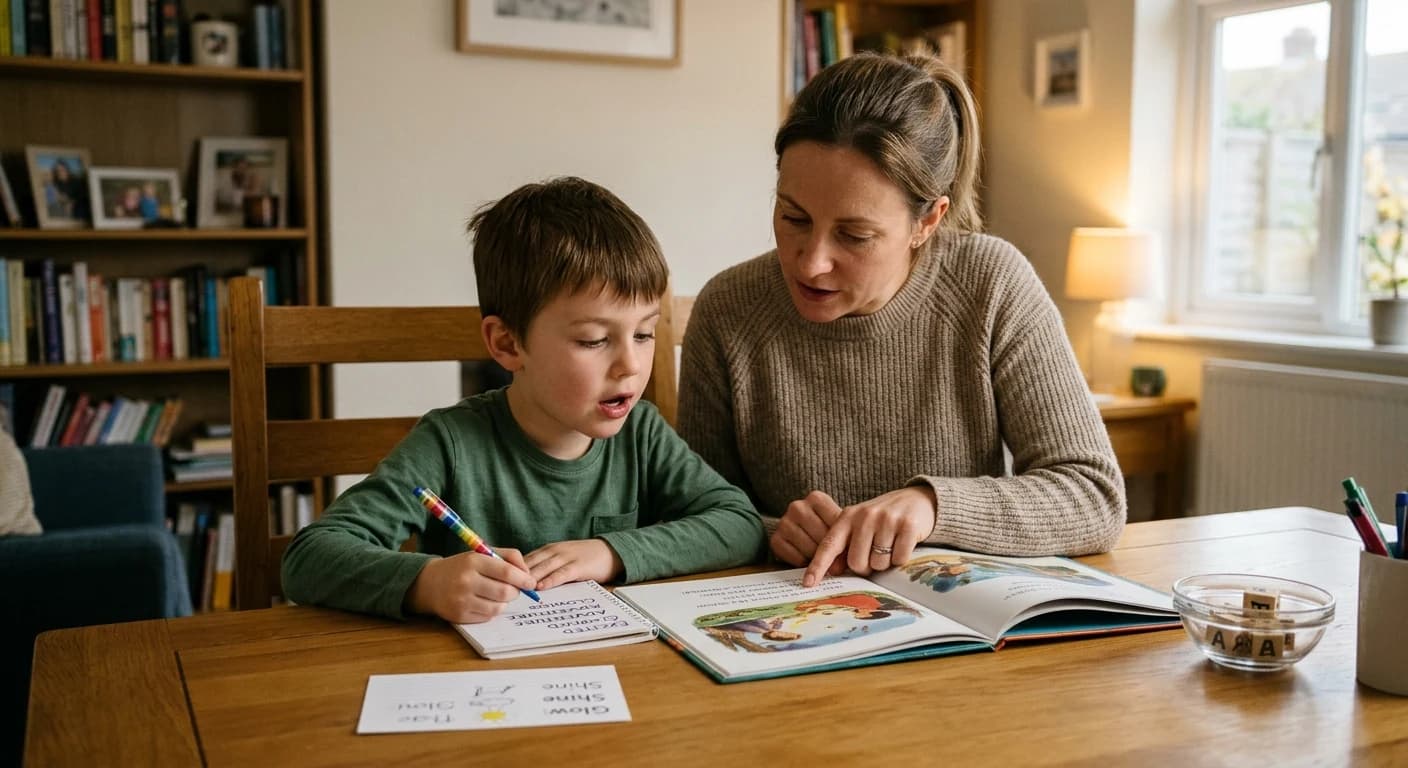
Supporting English practice at home does not have to mean adding a long worksheet to an already busy day. A short, repeatable routine can give a child time to read, notice useful language and explain an idea in their own words.
This 15-minute routine is a flexible starting point for Cambridge Primary families. Choose a short text that is suitable for your child, such as a passage from a book they already have, a school text they are allowed to revisit, or a short piece of original writing. Adjust the amount of reading and writing to the learner.
The 15-minute routine
1. Read and understand for five minutes
Read a short passage together or let your child read independently. Stop once or twice to ask what is happening or what the main idea seems to be. The aim is to understand the text, not to finish a certain number of pages.
If a word is unfamiliar, invite your child to keep reading the sentence and look for clues before reaching for a dictionary.
2. Explore two words for five minutes
Choose two useful or unfamiliar words from the text. For each one, try this sequence:
- Read the sentence again.
- Guess what the word might mean from the surrounding words or picture.
- Check the meaning together.
- Say a new sentence using the word.
 Use a word in a fresh sentence to connect it with its meaning.
A small number of words used in context is often easier to remember than a long list copied without examples. Keep the words in a notebook if that is helpful.
3. Respond and reflect for five minutes
Ask your child to share one idea from the text. They can tell you, draw a response, or write one to three sentences. Useful prompts include:
- “What do you think is important here?”
- “Which part helped you decide that?”
- “What might happen next, and why?”
For a younger learner, a spoken answer or labelled drawing is a perfectly useful response. An older learner might add a reason or a detail from the text.
Finish with one short reflection:
- “One thing I understand now is…”
- “A word I want to remember is…”
- “One question I still have is…”
This gives the child a chance to notice what they learned and what they might revisit another day.
How to keep it encouraging
- Let the child choose between suitable texts. Having some choice can make it easier to begin.
- Give thinking time. A pause does not mean a child has nothing to say.
- Respond to the idea before correcting every sentence. If a correction is useful, focus on one clear next step.
- Use your family’s strongest language to discuss ideas when helpful. The conversation can support understanding while the reading and word practice provide English exposure.
- Keep the routine flexible. Some days may take less than 15 minutes; another day, one interesting word may lead to a longer discussion.
A simple weekly check-in
Try the routine a few times when it fits your week. After a session, jot down the text or topic and one word your child noticed. At the end of the week, look back together: Which activity felt easiest to start? Which kind of text led to an interesting conversation?
The printable planner below lays out the three five-minute activities and a simple weekly check-in, with space to note three short sessions. It is a family practice aid, not a test or a measure of a child’s overall English ability.
 Print a simple planner to keep a few short sessions easy to remember.
Get the 15-minute English practice planner
A small, useful conversation about something your child has read is a good place to begin. There is no need to make every practice session perfect.